
I have spent a good part of my life watching nations decide, at critical moments, whether to wait or to move. And I have come to believe that the countries that go on to thrive are not always those with the most resources, but those willing to dream boldly and to act while others are still hesitating. South Sudan, the youngest country in the world at only fifteen years old, has chosen to move.
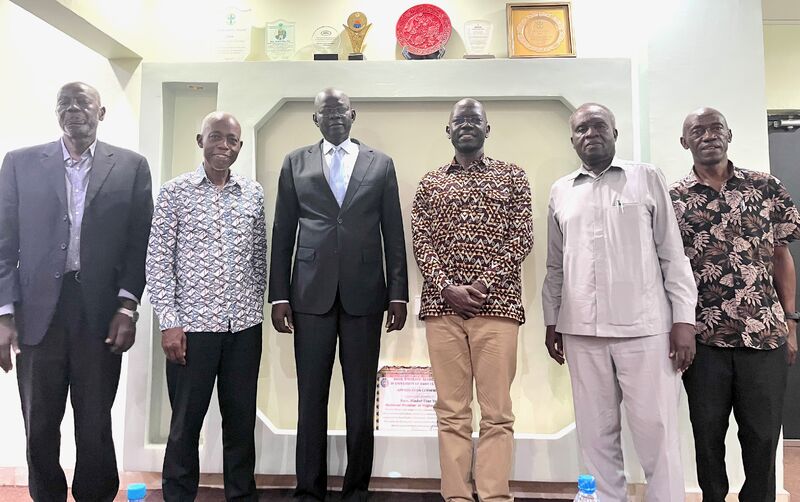
Despite the growing pains that come with being so young a nation, South Sudan is gathering momentum with remarkable purpose, racing to catch up with the rest of Africa, which is itself accelerating to catch up with the rest of the world. One of the strategic interventions on this journey, supported by the World Bank, is the establishment of the South Sudan National Research and Education Network, through which the country’s institutions of higher learning can link to one another nationally and connect into the global research and education fabric.
Let me describe that fabric, because it is easy to underestimate. Picture a vast spider’s web of undersea and overland optical cables and space-based satellites enveloping the earth. This is what enables the ease and immediacy of access to research collaboration partners, to online journals, and to online research tools, including compute resources anywhere in the world. It generally cohabits the same infrastructure as ordinary
communications, but it is operationally separate, and it guarantees the far higher quality of service that advanced research applications demand.
And yet this is not only a story about universities. National Research and Education Networks (NRENs) contribute directly to the growth of a country’s GDP. They do so by improving both access to and the quality of education and by lifting research productivity and research quality. In other words, when a nation weaves itself into this fabric, it is investing not merely in its scholars but in its own development.
At Knowledge Consulting, we have been involved in the digitalisation of universities and the establishment of national research and education networks across Africa, South America, and Asia for the last twenty-five years. (You can explore some of that work among our resources at kcl.co.ug/blog.)
So it is with real excitement and, I confess, a measure of personal pride, that we share the news that our consultants have been engaged to steward the establishment of the South Sudan Research and Education Network. The youngest country in the world has decided that it will not wait its turn to belong to
the future. That, to me, is the very art of dreaming.