
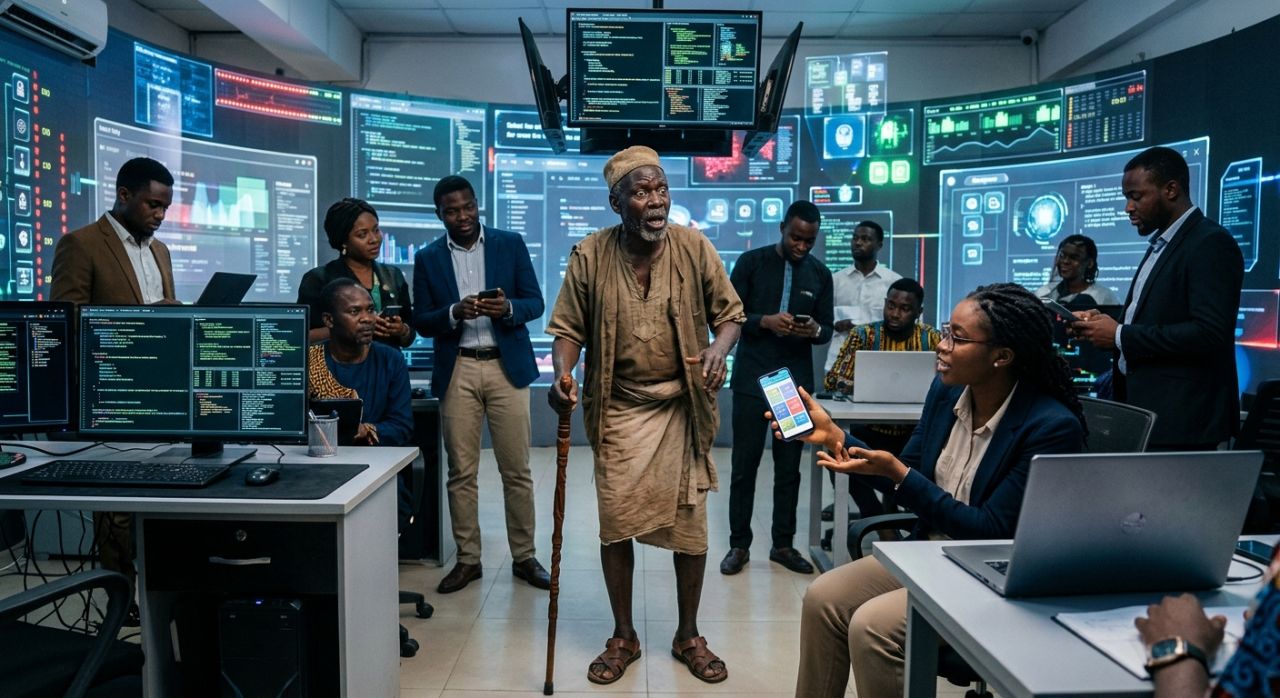
I am thinking about the state of technology adoption in many, and truth be told, most of our countries in Africa. I have observed and often spoken to leaders at the national policy level, in regulation, and in academic circles about the need to engage AI as fast as possible, even from the lowest levels of education, if our countries expect to survive and thrive in this new environment. And yet the pace remains agonizingly slow.
The fundamental challenge is that most of the decision makers are either aliens or tourists in the current rapidly evolving digital era and naturally want to play it safe. The threats AI poses (and these are very real) become the headlines. The obvious and potential benefits are secondary to the threats. The danger and the cost of being left out, which is the biggest threat, is considered only marginally, if at all.
Within the private sector, where national, regional, and global competitiveness is an imperative for survival, the reality is that AI agents are rapidly replacing people in many roles that were until recently the entry and training level for graduates—or more correctly, those who can work with AI agents comfortably in those roles are replacing those who cannot. (And if your private business thinks AI agents are science fiction, it is doomed). I am not listing specific professions, as anyone reading this has the capacity to do their own search for reliable sources and data on this.
The long and short of it is that if we do not change the current posture about AI integration in our education curricula at all levels, we shall be educating for a non-existent future. Change needs to happen now and to happen fast.