
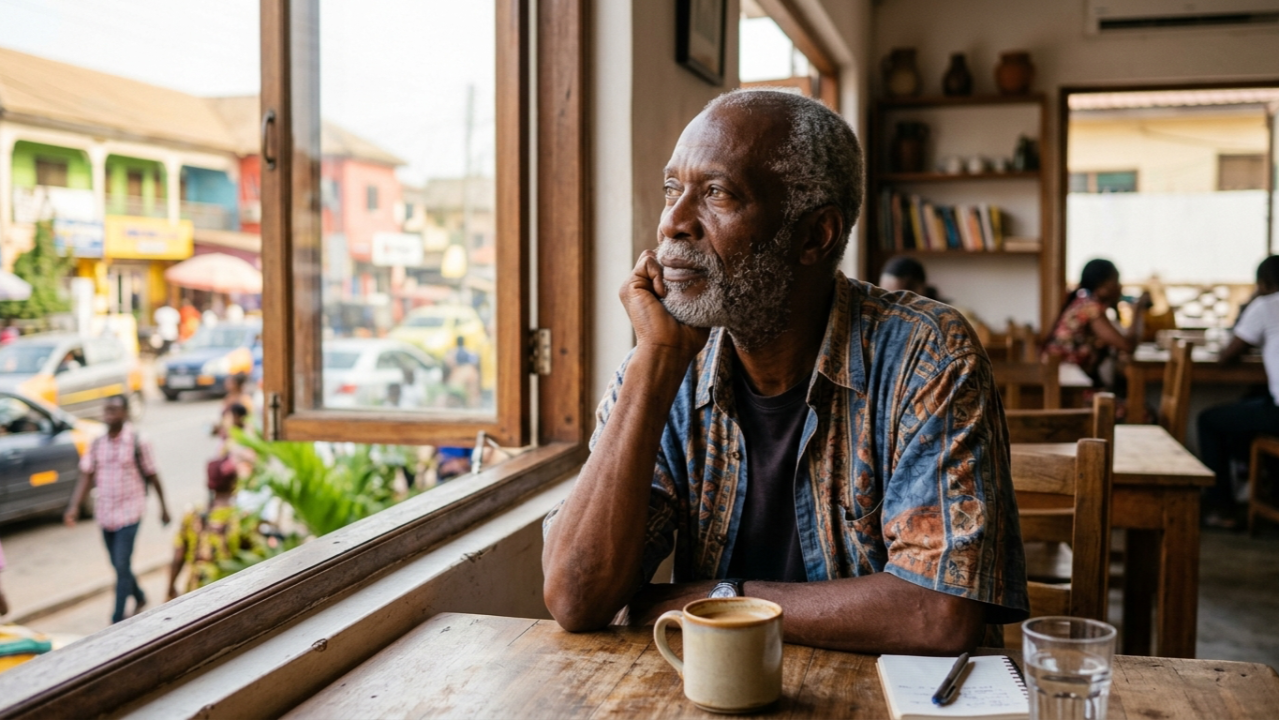
I love the nature of dreams, because, away from physiological explanations of the what and the how, the brain is unshackled from reality and what is logically possible to construct the seemingly impossible. The challenge and limitations we face when we are awake is that our brains are weighed down by knowledge, and what could be possible is locked down by logic driven by knowledge.
I want to believe this is why the Zen philosopher Shunryu Suzuki says, “In the beginner’s mind there are many possibilities, but in the expert’s, there are few.”
The Art of Dreaming therefore requires us to empty our minds of knowledge so that everything that comes to mind is not blocked by this barrier. A toddler sees a star in the sky and jumps to catch it with total confidence, and when they fail, they ask Mummy or Daddy to get it for them. In Greek mythology, Daedalus the inventor and his son Icarus decided to make wings from feathers and fly out of prison, never mind that Icarus failed because he did not heed the warning of not flying too close to the sun and the wax binding the feathers together melted. He died, but flying close to the sun, dangerous as it is, is the realm of dreams. As the adage says, nothing ventured, nothing gained.
How do we throw knowledge out of our minds in order to dream the seemingly impossible?
1. The first step is realizing that knowledge is defined by what is known—and I trust that we all, as a minimum, recognize the reality that what is unknown is much bigger than what is known. You need to learn to reject any barrier to your dreaming if it is based on logic driven by knowledge.
2. The second step is learning to question the obvious. Remember that at one point in time, it was obvious that the sun, just like the moon, rotated around the earth, so much so that when Aristarchus of Samos proposed a heliocentric model in the 3rd century BC, it was generally rejected: he was obviously wrong—at that time.
3. Third, learn to question the supposition of “fact,” or if you like, “anything known to be true,” another disguise for what is called obvious.
4. Fourth, avoid being definitive in your answers, because this leads your mind back into the prison of certainty that you are doing your best to escape. The point is that you gradually develop an outlook that accepts what many regard as the impossible and is therefore capable of big, bold dreams. You, at the same time, learn to welcome seemingly wild innovations, especially from the younger generations in their late teens and twenties, because their brains are comparatively unpolluted by knowledge. The seemingly wild ideas they may come up with are the direction to new adventures: do not reason them to death with your assumed knowledge. How do I know this to be true? Because I have lived it for a long time. I will share only three examples.
As founding director of the Directorate for ICT support in Makerere, I can still remember the shock of the Makerere University Council then; I used to spend less than $100,000 a year on the ICT budget when I presented a budget of over USD10 million for the digitalization of Makerere. The dream became reality in six years. This made it easier for the same councillors to buy into the dream of the Research and Education Network of Uganda, now one of the most advanced national research and education networks in Africa.
Working alongside other dreamers from Kenya, Rwanda, Malawi, Zambia, Mozambique, and South Africa, I was given the opportunity to be the founding CEO of the UbuntuNet Alliance. None of us had any official national affiliation. The “why” was boosting the quality of education and enhancing research output as drivers for socio-economic development. Our shared dream was researchers and academics in Africa having the same level of connectivity and affordability of internet access as the rest of the world, along with regional and global interconnections, to enable this. The International Development Research Corporation of Canada provided initial funding, and we used that as a springboard for mobilizing support from national governments and governmental agencies in Africa, private charities, and especially the European Union Commission. The Alliance is now a living reality.
If you are reading this, I challenge you to develop the Art of Dreaming, and through that, to release your mind from any current confinement to give yourself bigger, bolder, and better horizons and new possibilities.